

Synthetic vs. Bioactive Precision Peptides (And What You Need to Know)
Peptides are having a moment right now.
They’re everywhere — in med spas, functional medicine clinics, hormone optimization practices, and increasingly in the wellness space online.
But what are peptides actually?
Are they safe?
Are they synthetic?
Why do some require injections?
And how are they different from the new category of bioactive precision peptides?
Let’s break it all down in plain English.
What Are Peptides?
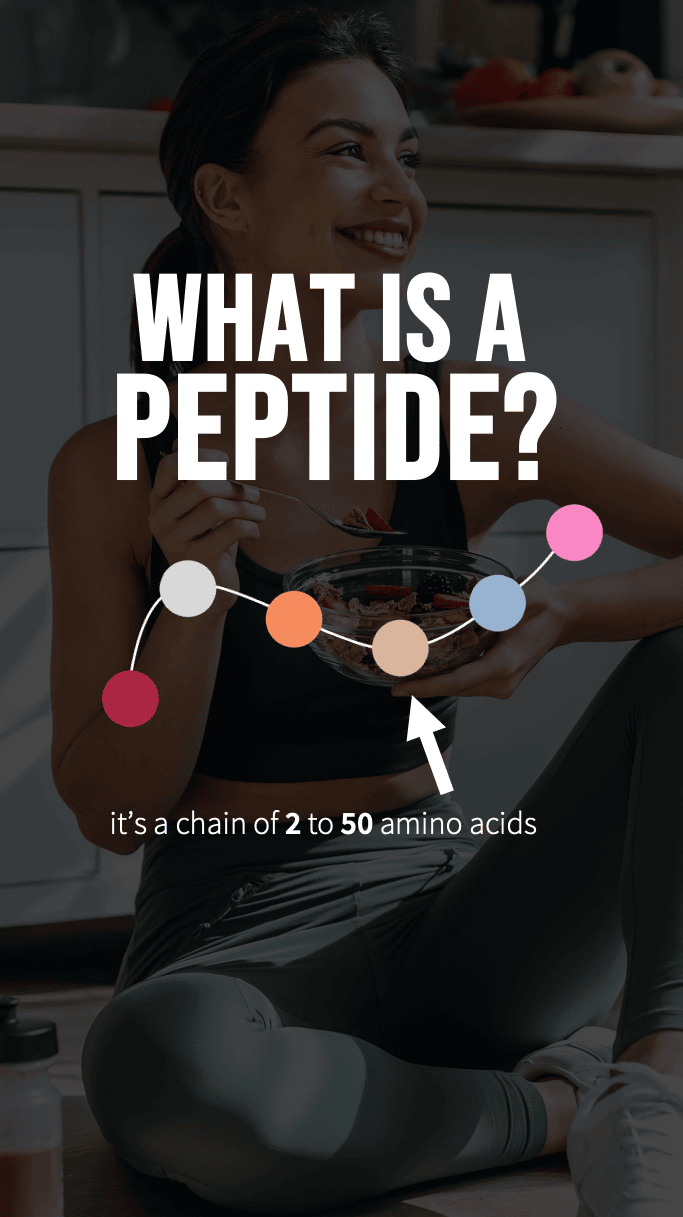
At their core, peptides are short chains of amino acids.
Amino acids are the building blocks of protein. When a small number of them link together in a specific sequence, they form a peptide. When many link together, they form a protein.
Your body already makes thousands of peptides naturally.
They act as messengers.
They tell your body to:
- Build muscle
- Repair tissue
- Regulate hunger
- Improve sleep
- Modulate inflammation
- Balance hormones
Peptides are essentially instruction signals.
What Are Synthetic Peptides?
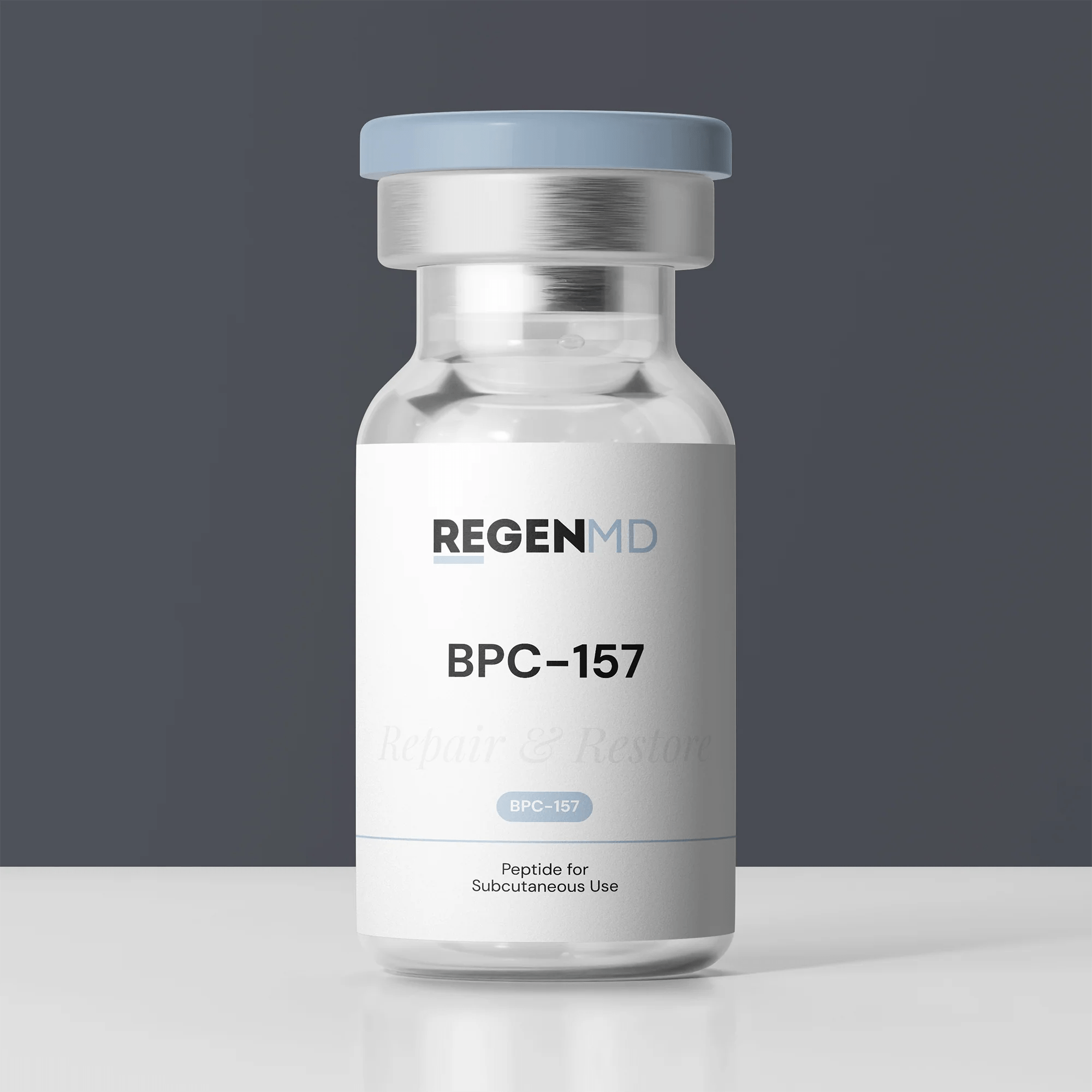
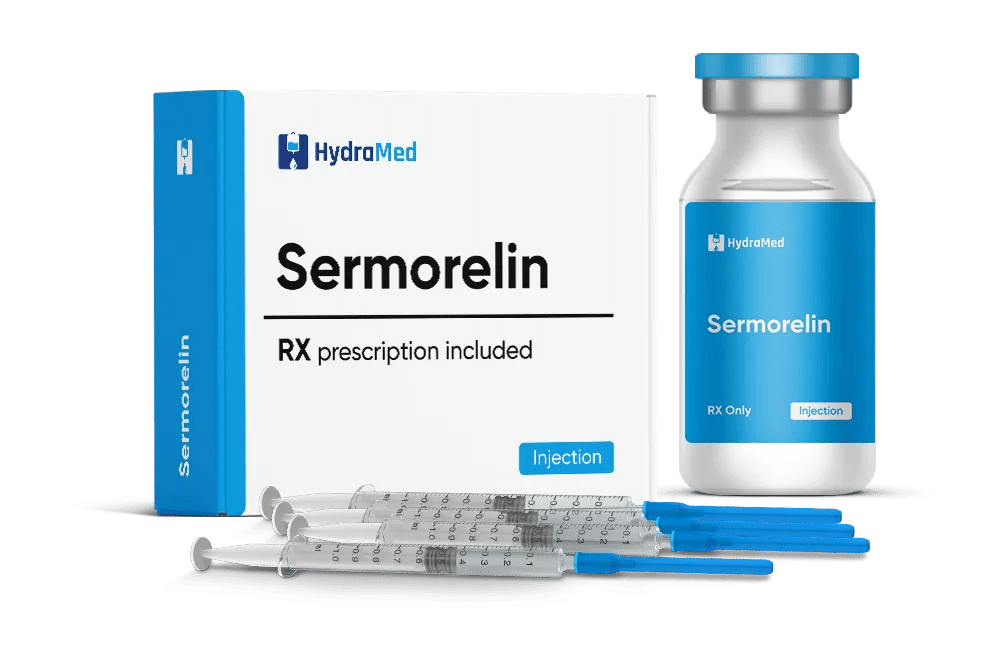
Synthetic peptides are lab-created versions of peptides that either:
- Mimic something your body already produces
- Amplify a specific biological pathway
- Override a signaling process
Some commonly discussed synthetic peptides include:
- BPC-157 – often marketed for tissue repair and gut support
- Sermorelin – stimulates growth hormone release
- Semaglutide – a GLP-1 receptor agonist used for appetite regulation
- Ipamorelin – another growth hormone–stimulating peptide
Most of these are:
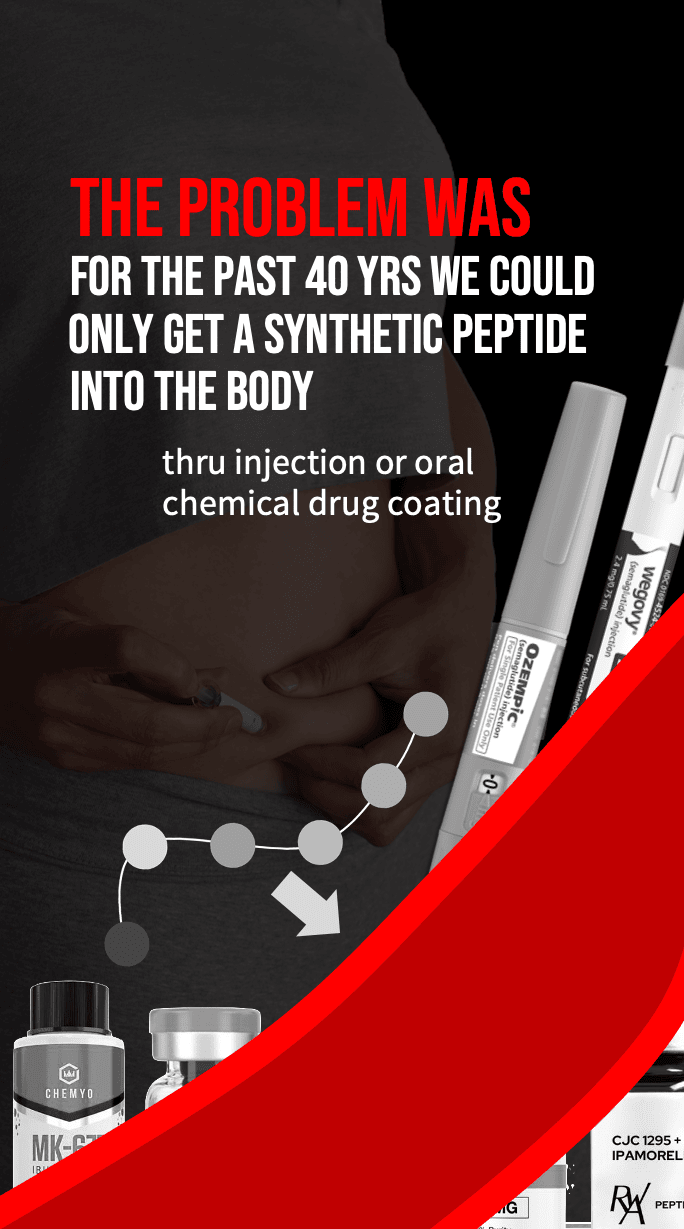
- Injected
- Prescription-based
- Used in medical or clinical settings
Why Are They Injected?
Here’s the key:
Most synthetic peptides are fragile.
If you swallow them, your digestive system breaks them down like food.
Stomach acid + digestive enzymes = destroyed peptide structure.
That’s why many require:
- Subcutaneous injections
- Compounded pharmacy preparation
- Medical oversight
Potential Side Effects of Synthetic Peptides
Because synthetic peptides often strongly stimulate or override a biological pathway, side effects can occur, such as:
- Nausea
- Headaches
- GI distress
- Water retention
- Hormonal fluctuations
- Changes in insulin sensitivity
- Injection site reactions
For some individuals, benefits outweigh risks.
For others, they don’t respond well at all.
And this is important:
No peptide works universally for every human.
Biology is bio-individual.
What Are Bioactive Precision Peptides?
Bioactive precision peptides are different.
Instead of being large synthetic analogs that override a pathway, they are:
- Naturally derived
- Precision-sequenced
- Designed to signal, not force
- Built to survive digestion
This is where advanced computational modeling and AI come in.
How AI Is Used
Using artificial intelligence and peptide mapping technology, researchers can:
- Identify specific amino acid sequences that influence targeted biological pathways
- Model how those sequences behave in the human digestive tract
- Optimize them for stability so they remain intact long enough to be absorbed
In other words:
They are engineered to survive digestion.
Instead of being destroyed by stomach acid, they’re structured in a way that allows them to pass through the digestive system and reach circulation — without injections.
That’s why they can be taken orally.
No needles required.
How Bioactive Precision Peptides Work Differently
Rather than overriding your system, they work by:
- Supporting natural signaling pathways
- Modulating communication between systems (like gut-brain signaling)
- Encouraging balance instead of forcing output
For example:
- Supporting appetite regulation by influencing leptin and ghrelin balance
- Supporting lean mass retention
- Supporting recovery pathways
- Supporting NAD+ production (which plays a role in cellular energy and aging)
The goal isn’t to overpower the body.
It’s to support its existing intelligence.
What About Side Effects?
Because bioactive precision peptides work more modulatory than forceful, side effects tend to be milder — but that doesn’t mean zero.
Some people may experience:
- Temporary digestive changes
- Shifts in hunger cues
- Mild headaches
- Changes in energy levels
And just like synthetic peptides:
What works beautifully for one person may not work the same for another.
That’s not failure.
That’s physiology.
The Big Truth: Peptides Are Not Magic
This is the part people don’t want to hear.
No peptide — synthetic or bioactive — replaces:
- Eating adequate protein
- Strength training
- Getting quality sleep
- Managing stress
- Moving daily
- Supporting micronutrient intake
If someone is:
- Undereating protein
- Sleeping 5 hours a night
- Chronically stressed
- Not resistance training
No peptide will fix that foundation.
Peptides amplify what’s already happening.
They are a tool.
Not a replacement for lifestyle.
Why Results Differ Between People
Here’s why one person sees dramatic results and another doesn’t:
- Baseline hormone levels differ
- Insulin sensitivity differs
- Sleep quality differs
- Muscle mass differs
- Stress load differs
- Gut health differs
Two people can take the same peptide and have completely different outcomes.
This is why a comprehensive approach matters.
Which Route Is Right?
There is no universal answer.
Some individuals:
- Prefer medically supervised injectable peptides
- Need targeted clinical intervention
Others:
- Prefer non-invasive options
- Want to support natural signaling pathways
- Want something that integrates into daily wellness
The key is education, informed consent, and understanding your own body.
Final Thoughts
Peptides are powerful messengers.
Synthetic peptides can strongly stimulate specific pathways and often require injections because they cannot survive digestion.
Bioactive precision peptides are engineered differently — using advanced modeling to remain stable through digestion and support signaling pathways orally.
But neither replaces:
- Protein at every meal
- Strength training
- Recovery
- Sleep
- Nutrient-dense food
- Consistency
Technology is powerful.
Your daily habits are more powerful.
Peptides can support the work.
They cannot replace it.
Where Make Wellness Bioactive Precision Peptides Fit In
Make Wellness developed a category called Bioactive Precision Peptides™.
These are not compounded injectables.
They are not synthetic GLP-1 medications.
They are not hormone replacements.
They are orally delivered peptide sequences designed to support natural biological signaling pathways.
Using advanced computational modeling and AI-assisted peptide mapping, Make Wellness identifies specific peptide sequences that:
- Influence targeted biological pathways
- Remain stable long enough to survive digestion
- Can be delivered without injections
The goal is not to override the body.
The goal is to support it.
For example:
- LEAN is designed to support appetite regulation through gut-brain signaling and healthy metabolic pathways.
- FIT supports lean mass preservation and includes precursors that support NAD+ production, which plays a role in cellular energy and aging.
- CALM and RESTORED are designed to support recovery and healthy sleep signaling pathways.
These products are not drugs.
They are not intended to diagnose, treat, cure, or prevent disease.
They are nutritional supplements designed to support the body’s natural processes.
And like we discussed earlier:
They work best when paired with:
- Adequate protein intake
- Progressive strength training
- Quality sleep
- Daily movement
- Stress management
- Whole-food nutrition
They are not a shortcut.
They are a support tool.
Who Might Consider This Approach?
Bioactive Precision Peptides may appeal to individuals who:
- Prefer a non-invasive option
- Are looking to support metabolism, recovery, or energy naturally
- Want to integrate peptides into an overall wellness routine
- Value a signaling-support approach rather than pathway override
But just as with synthetic peptides, response varies by individual.
Some people notice shifts quickly.
Others notice gradual changes.
Some may not respond as strongly.
Bio-individuality always matters.
My Approach as a Coach
As a coach, I don’t recommend peptides in isolation.
I look at:
- Protein intake (30g per meal is often a solid starting point)
- Strength training frequency
- Sleep habits
- Daily step count
- Blood sugar stability
- Stress load
If those foundations aren’t in place, we start there.
Peptides can enhance the process.
They cannot replace it.
Ready to Learn More?
If you’re curious whether Bioactive Precision Peptides could be a good fit for your goals, I invite you to:
- Comment LEAN or FIT on my social posts
- Message me directly
- Or visit my referral link to explore the science and ingredient breakdowns in more detail
No pressure. No hype.
Just education and informed decisions.
Because the right approach is the one that aligns with your body, your lifestyle, and your long-term health goals.
Comment below and tell me if you’ve tried peptides at all (synthetic or bioactive)
Stay Healthy my Friends!
XO,
Carrie A Groff
Discover more from CG Fitness: Personal Training, Nutrition & Yoga
Subscribe to get the latest posts sent to your email.

 CG Fitness: Personal Training, Nutrition & Yoga